
Security Awareness, Behavioural Detection & CT Awareness

Training your people to recognise threats before they escalate

Our Training

1705 Consultancy delivers specialist Security Awareness and Behavioural Detection training designed to protect your venue, organisation, and people.

Every course we deliver has one clear purpose: to equip your staff with the knowledge, confidence, and skills to recognise threats early, respond effectively, and reduce risk — before an incident escalates.

Security Awareness Courses That Protect
Your People & Premises

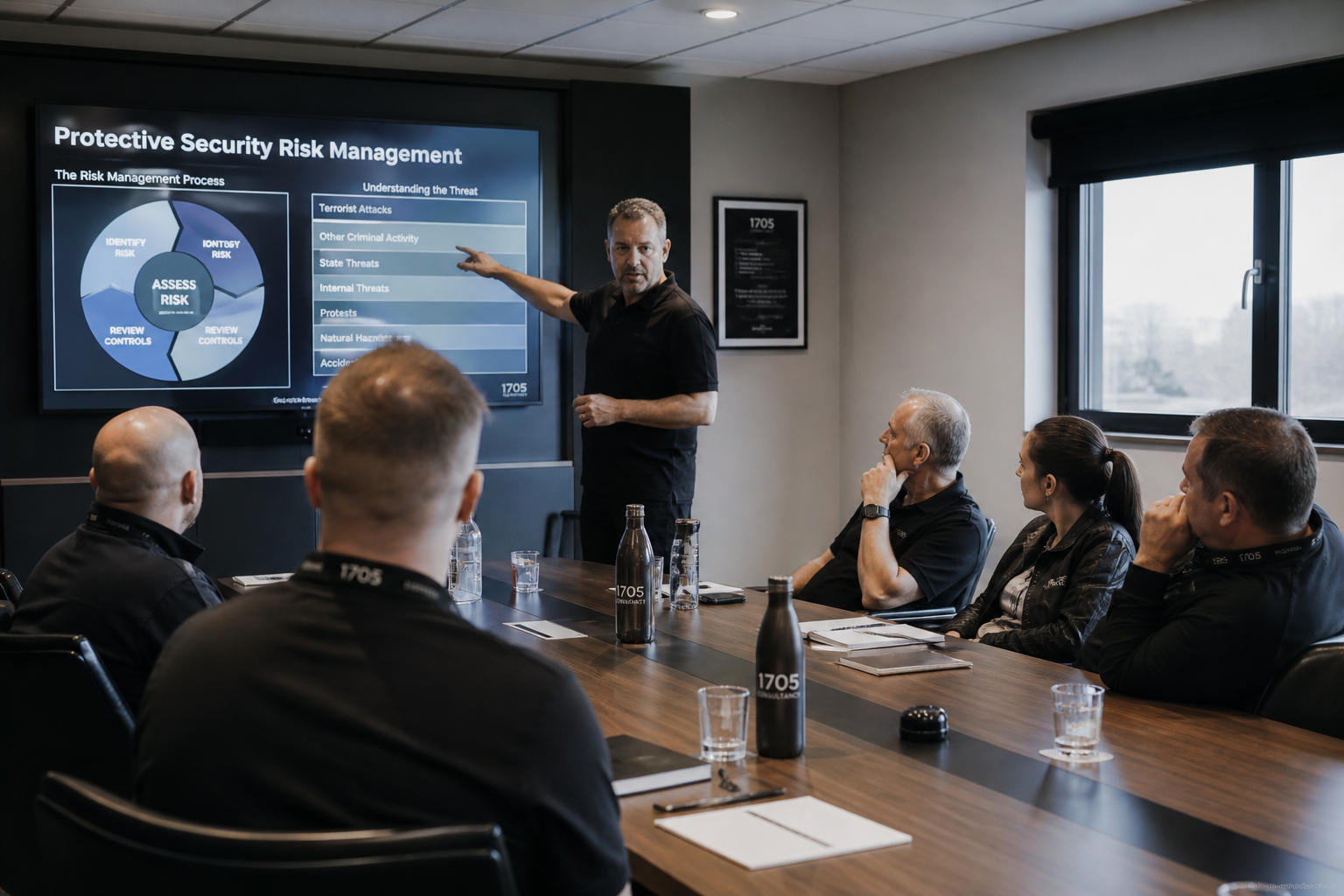
Security awareness — behavioural detection training in practice

Behavioural Detection (Bespoke)

Behavioural Detection (Bespoke) — delivered by our expert partner, this tailored course turns staff into early-warning sensors. Learn to spot pre-attack indicators and hostile reconnaissance, deter safely without profiling, and escalate/report cleanly using clear comms and scene management. Built around your venue and threat picture, with legal/ethical boundaries, practical drills, and integration to your CT plans (M/ETHANE/JESIP). Ideal for front-of-house, security/stewarding, and management teams.

Security awareness training — hostile reconnaissance identification

Hostile Reconnaissance Awareness Training

Hostile Reconnaissance Awareness — This focused course helps staff recognise hostile reconnaissance and early information-gathering behaviours around your site. It explains how suspicious interest, pattern-building and testing of security measures may appear in practice, and how to deter or challenge safely within legal and ethical limits. Learners gain a clear observation and reporting process linked to your venue plans and escalation routes, supported by simple scene management aligned with METHANE and JESIP. Ideal for front-of-house, operations staff and managers who form your first line of awareness.

Security awareness — counter terrorism awareness training

CT Awareness & ACT Workshop

CT Awareness & ACT Workshop turns national ACT guidance into your site's actions. In a focused session, teams learn to spot and report suspicious activity, understand Run-Hide-Tell, and rehearse evacuation, invacuation and lockdown with plain-language scripts. We leave you with clear checklists, short drill plans, and evidence-ready records so leaders can prove readiness tomorrow. Ideal for all staff, supervisors and stewards.

Security awareness training — Prevent counter terrorism strategy

Prevent Awareness

Prevent Awareness builds confident, proportionate safeguarding: recognise vulnerability and early signs of radicalisation (online/offline), choose the right referral pathway, and record concerns well. We cover duties, boundaries, confidentiality, and how to have difficult conversations — protecting people and your organisation from harm and reputational risk. Ideal for all staff, supervisors and safeguarding leads; includes simple checklists and reporting templates.

De-escalation essentials training course card — 1705 Consultancy

Martyn's Law Awareness (Protect Duty)

Martyn's Law Awareness explains who's in scope, the difference between Standard vs Enhanced tiers, and what "reasonably practicable" measures look like on your premises. We translate the duty into clear actions — risk assessment, procedures (evacuation/invacuation/lockdown), training, and documentation — plus the evidence inspectors will expect and how to get it audit-ready. Ideal for venue managers, event leads, trustees and ops teams; includes practical checklists and next-step templates.

Security awareness training — HOT explosive device detection methods

HOT Awareness and Explosive Threat Management

HOT Awareness and Explosive Threat Management gives staff clear steps for managing bomb threats, suspicious items and mail risks. The course turns HOT and the 4Cs into practical action through call handling drills, structured questioning and realistic role play. Teams learn safe checking techniques, cordon setup, calm PA or radio messaging and clean escalation to police. The session is practical, venue-focused and supports accurate decision recording for compliance.

Security awareness training — insider threat detection and response

Insider Threat & Social Engineering

Insider Threat & Social Engineering closes the easy doors attackers use: tailgating, badge misuse, shoulder-surfing/phishing on the floor, and "urgent favours." Staff learn simple habits, challenge scripts, and clear boundaries for visitors, contractors, and colleagues — plus how to verify requests, spot red flags, and report early. Practical drills make secure behaviour the default without slowing the job.

Security Awareness FAQs

What's Behavioural Detection training, and how does it differ from general security?

Behavioural Detection teaches staff to recognise subtle patterns (unusual loitering, concealment behaviour, reconnaissance activity) that may indicate threat. It goes beyond checking ID badges and helps you spot genuine security risks before they escalate.

Hostile reconnaissance can target any location — schools, hospitals, entertainment venues, public spaces. If you attract crowds or are in a visible location, this training is relevant and protective, not just for stadiums and arenas.

Prevent Awareness covers recognising signs of radicalisation among staff or visitors and your reporting responsibilities under the Prevent strategy. It’s highly recommended for schools, healthcare, and public spaces.

Martyn’s Law requires qualifying venues (capacity 200+) to conduct terrorism risk assessments and implement protective measures. We provide training to help you understand the law and build compliant procedures before enforcement begins.

Insider Threat & Social Engineering training teaches staff to recognise manipulation attempts — phishing emails, impersonation, pressure tactics. It’s critical for anyone with access to systems, data, or sensitive areas, not just security teams.

Yes, all our behavioural detection training is bespoke — we assess your venue type, historical incidents, likely threats, and staff roles, then tailor scenarios and exercises accordingly. A school’s threats differ vastly from a nightclub’s.

We recommend annual refreshers (or every 18 months minimum) as threat landscapes change and staff turnover occurs. We can deliver refreshers as 1–2 hour sessions rather than full courses for efficiency.

We recommend post-training assessments and incident tracking — fewer security breaches, better reporting of suspicious activity, and faster staff response to alerts indicate effectiveness. We can help design these measures.